
Time:2026-02-02
Sapphire glass, as a material, has been applied in multiple fields due to its excellent physical properties. However, there are also many limitations in its practical application, mainly reflected in cost, processing difficulty, optical performance, and adaptability in specific environments.
The processing difficulty of sapphire glass is relatively high, which limits its application in complex shaped products. The Mohs hardness of sapphire reaches level 9, which makes it extremely wear-resistant, but also brings processing difficulties. Traditional cutting and polishing processes require diamond tools, which have low processing efficiency and severe tool wear. Brittleness can significantly reduce the yield rate when manufacturing curved screens or irregular structures.
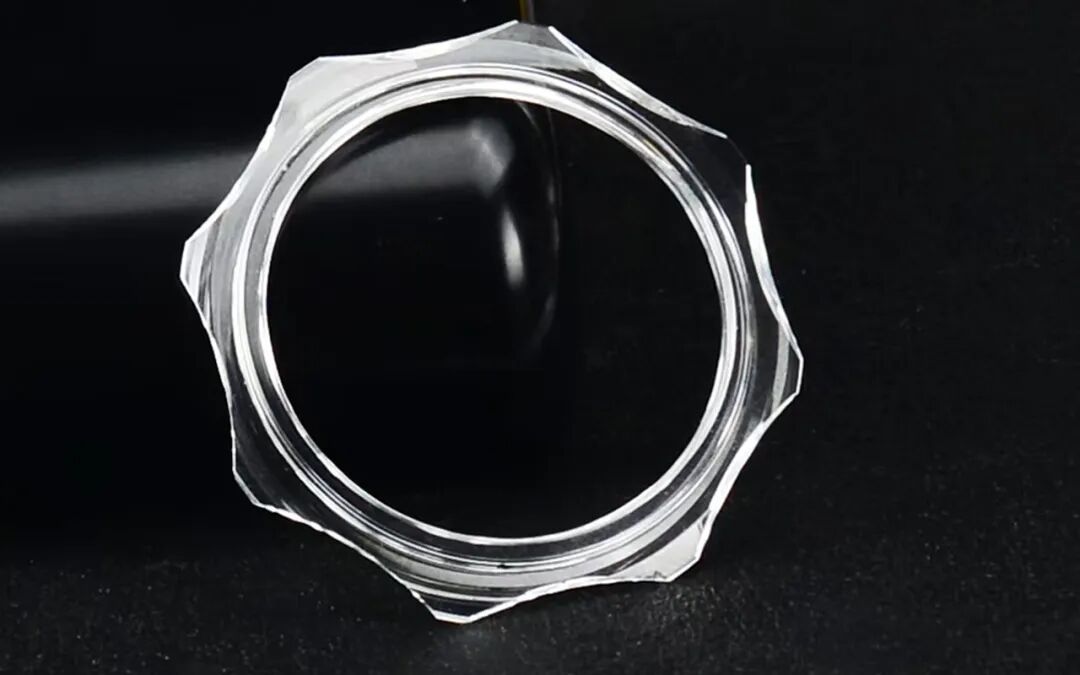
In terms of optical performance, sapphire glass also has certain limitations. Although it exhibits excellent transparency in the visible light range, absorption peaks may appear at certain specific wavelengths. For example, in the infrared band, the transparency performance significantly decreases, which limits its application in certain special optical instruments. In addition, the refractive index is relatively high (about 1.76), which may require additional coating treatment in some optical designs to reduce reflection losses, increasing the complexity and cost of the optical system.
The mechanical properties of sapphire glass also have duality. Although it has high surface hardness and excellent scratch resistance, its toughness is relatively insufficient. When subjected to impact, it is more prone to breakage than chemically strengthened soda lime glass. At the same thickness, the impact resistance of sapphire glass is only about 60% of that of reinforced glass. This feature puts it at a disadvantage in application scenarios that require impact resistance, such as the use of sports smartwatches in harsh environments.
Thermal performance is also an important factor limiting applications, with high thermal conductivity being an advantage in some cases, but it may become a problem in environments with rapid temperature changes. Due to the significant difference in thermal expansion coefficient compared to most metal materials, stress concentration is prone to occur under temperature cycling conditions, leading to interface failure.
In terms of touch applications, the surface characteristics of sapphire glass also have shortcomings. Its low surface energy makes it easier for fingerprints and oil stains to adhere and difficult to wipe clean, affecting the user experience. In contrast, ordinary glass that has undergone special treatment often performs better in terms of anti fouling performance. In addition, the attenuation of capacitive touch signals is significant, which requires devices to be equipped with stronger touch driver circuits, increasing power consumption and design difficulty.
Although sapphire glass has many excellent characteristics, it has limitations in processing, optical properties, mechanical properties, thermal properties, touch experience, size limitations, design freedom, and other aspects. These restrictions make it difficult to achieve widespread application and only work in specific fields.

Tel
Mobile phone
Customer service
TOP